

How to React If You See a Bear
Bears prefer to avoid people whenever possible, but both black bears and grizzly bears are powerful wild animals and may defend themselves when surprised or feeling threatened. Deliberate attacks on people are very rare. Keep reading to learn what to do if you encounter a bear.
If You Encounter a Bear

In or Near a Building or Dumpster
- Back away from the bear.
- Give the bear a clear escape route; do not corner it.
- Leave any doors open; do not lock the bear in a room.

In Your Yard or Garden
- From a safe distance, make loud noises to scare away the bear.
- When the bear leaves, remove or secure potential attractants.
- Always check your yard for bears before letting out dogs.

In Camp
- If a bear comes into camp, do not approach it.
- Group together. Yell, make noise, throw objects (not food) to scare it away.
- If a bear enters your tent, FIGHT BACK with anything available.

Surprise Encounter at Close Range
- If the bear has cubs, a food source or no clear escape route, backing away slowly may convince the bear you are not a threat.
- If the bear makes physical contact with you, PLAY DEAD.

In the Woods, On the Trail
- If you see a bear that is not aware of you, do not approach.
- Enjoy the moment, then move away quietly.
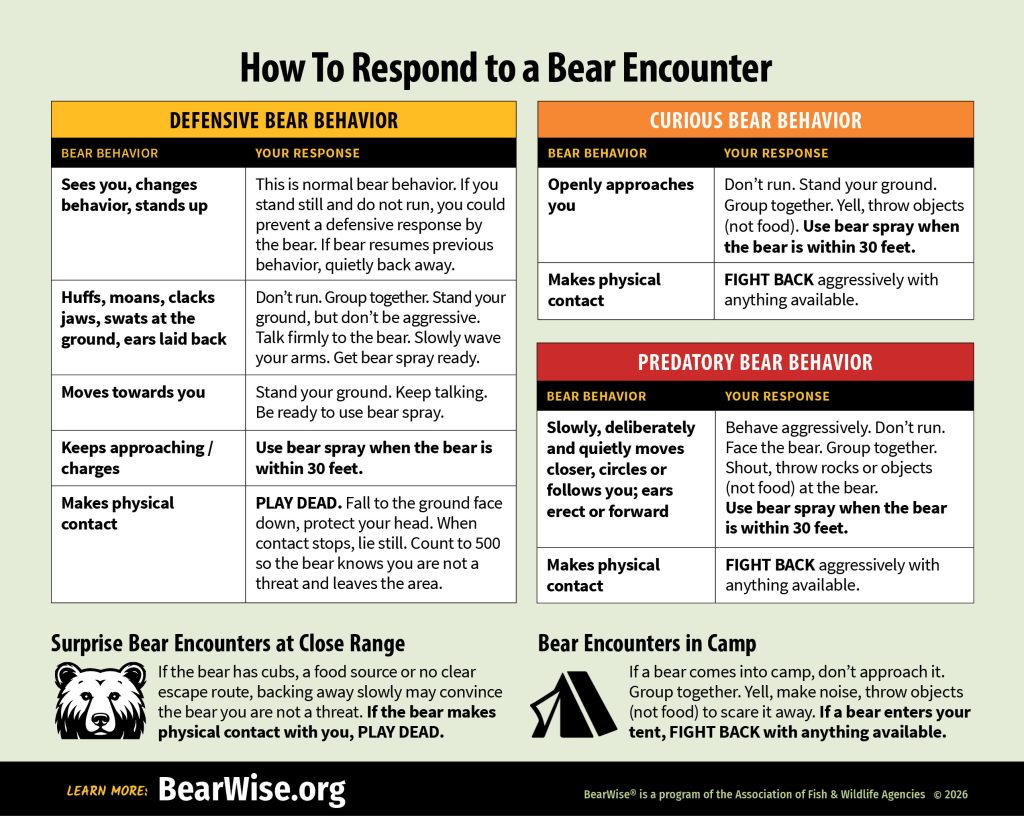
- If a defensive bear approaches, follows or charges you, how you respond will be based on the bear’s behavior. KEEP READING and also download our free Encounters fact sheet.

Bear Behavior & Your Response
Defensive Bear
Bears often behave defensively when surprised, feeling cornered or protecting their food or cubs. Their blustery behavior is meant to warn you to stay away. It seems scary, but it’s a sign of stress, not an impending attack.
Surprising a bear at close range is both the most common cause of incidents that result in injuries and the most avoidable.
Bear Behavior | YOUR RESPONSE
If a bear sees you, changes behavior, stands up (this is normal bear behavior):
- If you stand still and do not run, you could prevent a defensive response by the bear.
- If bear resumes previous behavior, quietly back away.
Huffs, moans, clacks jaws, swats at the ground, ears laid back:
- Don’t run. Group together. Stand your ground, but don’t be aggressive.
- Talk firmly to the bear. Slowly wave your arms.
- Get bear spray ready.
Moves towards you:
- Stand your ground. Keep talking.
- Be ready to use bear spray.
Keeps approaching or charges:
- Use bear spray when the bear is within 30 feet.
If a defensive bear makes physical contact:
- PLAY DEAD. Fall to the ground face down, protect your head.
- When contact stops, lie still. Count to 500 so the bear knows you are not a threat and leaves the area.
Curious Bear
Young, curious bears testing their boundaries or looking for food sometimes boldly approach people on trails or in camp, and may even swat at you.
Bear Behavior | YOUR RESPONSE
A curious bear openly approaches you:
- Don’t run. Stand your ground.
- Group together. Yell, throw objects (not food).
- Use bear spray when the bear is within 30 feet.
If a curious bear makes physical contact:
- FIGHT BACK aggressively with anything available.
Predatory Bear
True predatory behavior is both very rare and very different from the behavior of a nervous defensive bear. The bear won’t bluster, vocalize, charge or try to intimidate you. It will be calm and purposeful, methodically approaching or silently circling or following you with ears erect.
Bear Behavior | YOUR RESPONSE
A predatory bear slowly, deliberately and quietly moves closer, circles or follows you; ears erect or forward:
- Behave aggressively. Don’t run.
- Face the bear. Group together.
- Shout, throw rocks or objects (not food) at the bear.
- Use bear spray when the bear is within 30 feet.
If a predatory bear makes physical contact:
- FIGHT BACK aggressively with anything available.
Get BearWise Before Heading Outdoors

Video: Staying Safe in Bear Country
This video features important advice from black bear and grizzly experts. See how taking basic safety precautions will help you minimize the chances of having an encounter with a bear. (Source: International Association for Bear Research and Management)
Top photo: Steve Uffman
